

1. General Concepts and Production
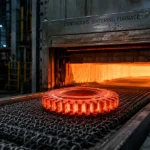
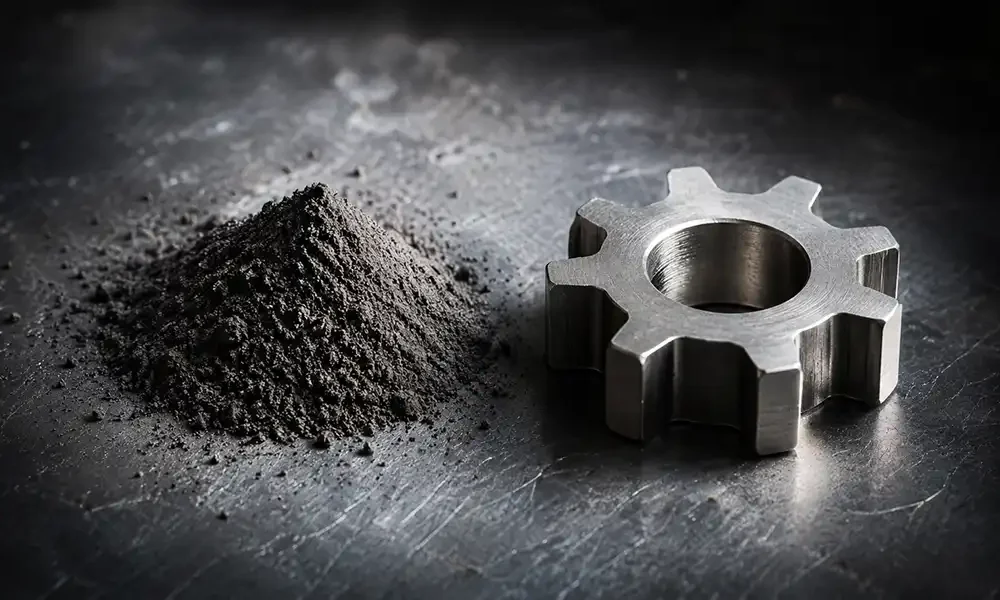
What Exactly Is Powder Metallurgy (Sintering)? Powder metallurgy, an advanced manufacturing technology, is based on the principle of shaping alloyed metal powders—prepared specifically for each project—by pressing them into high-capacity molds and then subjecting them to heat treatment (sintering) in controlled furnaces without reaching their melting point. As a chip-free production method, it prevents raw material waste while offering enormous speed and cost advantages in mass production.
What Parts Can Be Produced Using This Method? From complex gears in power transmission systems to self-lubricating (porous) bronze bushings; from mechanical cams to structural lock and shock absorber components—countless parts can be produced. It is an ideal engineering solution, particularly for asymmetrical and complex shapes that would take a long time to machine individually using conventional machining methods.
Which Raw Materials Are Preferred in Production? Depending on the load, friction, and operating environment to which the part will be exposed, iron-carbon and iron-copper alloys are used for structural strength; bronze (copper-tin) powders are used for maintenance-free bearings, and stainless steel powders are used in projects requiring high corrosion resistance.
2. Engineering and Design Limitations
What Are the Maximum Size and Weight Capacities for Production? Production capacity is directly related to the tonnage of the molding presses. Generally, parts with a diameter not exceeding 100–150 mm and a weight ranging from a few grams to a maximum of 3 kilograms fall within the most economical range for powder metallurgy. Larger dimensions fall within the scope of casting technologies.
What Should the Minimum Wall Thickness Be? From an engineering standpoint, it is necessary to maintain a minimum wall thickness of 1 mm during the pressing process to ensure that metal powder flows properly within the die and to prevent brittleness. The uniform distribution of the wall thickness directly increases the part’s strength.
What Geometric Constraints Should Be Considered in Design? Since the parts are ejected from the mold via a vertical pressing motion, horizontal (side) holes, undercuts, or screw threads cannot be formed in a single press cycle; additional machining operations are performed after sintering to create these features. Additionally, to maximize mold life, it is critical to round off sharp internal corners in the design with a minimum radius of 0.5 mm.
What Are the Achievable Dimensional Tolerances? Depending on the part’s geometry and orientation, extremely precise tolerances ranging from ±0.05 mm to ±0.1 mm are achieved in standard production. For projects requiring even tighter tolerances (micrometer-level precision), a “calibration (flattening)” operation is performed after sintering.
What Is the Effect of Particle Density on Mechanical Performance? The greatest strength of powder metallurgy is the ability to control part density. As the pressing pressure increases, the part becomes denser, and its mechanical hardness and wear resistance increase (for gears and structural components). However, when producing self-lubricating bushings, the density is intentionally kept low; this allows liquid oil to be absorbed into the material’s micro-pores, ensuring frictionless operation.
3. Comparison with Other Methods and Advantages
What Are the Advantages Compared to Machining (CNC)? In CNC machining, a part is produced by machining it from a solid block of metal, resulting in a very significant amount of scrap (machining chips). In powder metallurgy, however, the raw material takes on the exact shape of the mold, and material waste is nearly zero. While machining a single part on a CNC machine takes minutes or hours, in sintering technology, hundreds of parts reach their final form within minutes.
What Is the Difference Between This and Casting? In the casting process, the metal is completely melted and poured into the mold in liquid form; this process subsequently requires surface grinding or additional CNC machining. In sintering, however, the metal never becomes liquid; it is pressed and fired. This ensures that the part emerging from the mold has much more precise dimensions and a smooth surface finish.
At What Order Quantities Does It Offer a Cost Advantage? The primary cost component of this method is the investment in precision steel molds produced specifically for the project. For this reason, it offers undeniable economic profitability in high-volume projects (typically serial production runs of 10,000–20,000 units or more per year), where the per-unit share of the mold cost is minimized.
Is Sintering an Environmentally Friendly (Green) Production Method? Evet. Üretimde kullanılan metal tozunun tamamına yakını (%95+) nihai parçaya dönüştüğü için endüstriyel atık oluşmaz. Talaşlı işlemlerin devreden çıkması ve enerji tüketiminin minimize edilmesi sayesinde karbon ayak izi son derece düşük, sürdürülebilir bir üretim modelidir.
How Can I Adapt My Project for Powder Metal Production? Transferring your existing CNC or casting design directly to powder metal may not always yield the most efficient result. When you share your 3D models or technical drawings with our expert engineering team, we provide technical analysis support to assess your part’s castability, ensure the correct alloy selection, and identify design optimizations that will reduce costs.
Design Guide: Frequently Asked Questions
Powder Metallurgy Technology