

1. Basic Design Criteria and Molding
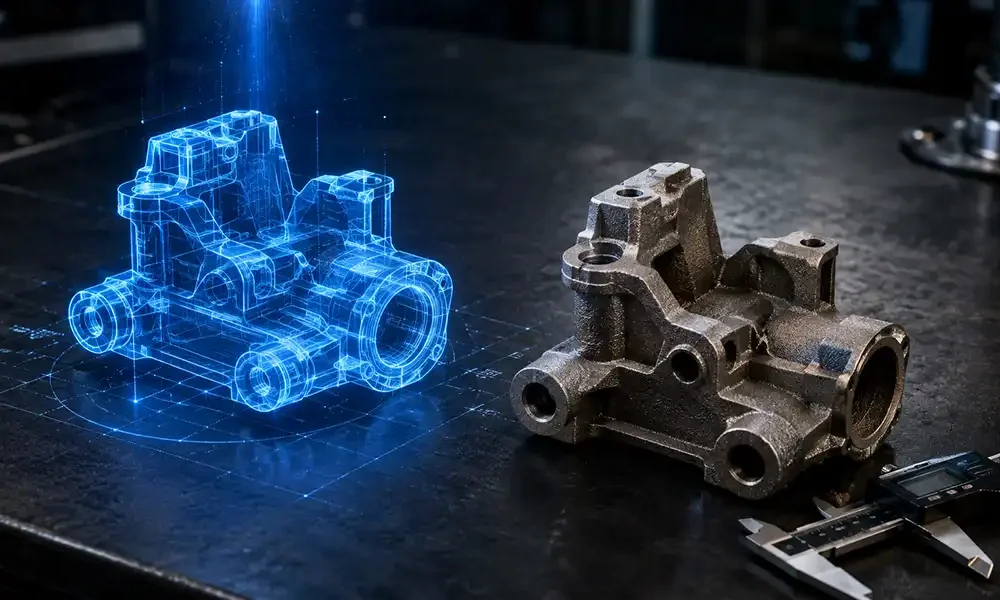
What Are the Golden Rules for Designing Parts Suitable for Powder Metallurgy? The most common mistake made during the design process is to design the part using traditional CNC (machining) logic. To achieve maximum efficiency in sintering technology, the most appropriate engineering approach is to ensure the part aligns with the vertical pressing direction, distribute wall thicknesses evenly, and design assembly groups—which typically consist of several parts—so that they are integrated into a single body.
How Does the Ejection Direction Affect the Design? Powder metal production is carried out using high-tonnage single-axis (vertical) presses. For this reason, all geometric details on the part must be designed parallel to the die’s vertical opening and closing axis (in a shape that allows for easy removal from the die).
What Are Geometric Shapes That Cannot Be Removed Directly from a Mold? Undercuts or reverse-angle recesses that prevent the die from moving vertically cannot be formed during the pressing stage. Such complex horizontal details are incorporated into the production plan and added to the part through secondary processes following sintering.
Why Are Sharp Corners Undesirable in Design? Sharp 90-degree inside and outside corners not only cause the mold to wear out much more quickly but also create stress concentrations on the part, thereby reducing its mechanical strength. Adding an appropriate radius (curve) at these points significantly increases the part’s strength.
2. Hole, Gear, and Geometric Features
What Types of Holes Can Be Used in Design? Blind holes, through holes, and keyed (grooved) features parallel to the die’s pressing axis are formed flawlessly directly in the die. However, since horizontal (side) holes that are perpendicular to the pressing direction cannot be formed directly in the die, they are drilled using machining after the sintering process.
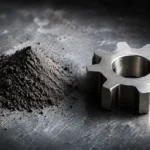
Can Gear Profiles Be Manufactured Without the Need for Post-Processing? Yes, this is one of the greatest engineering advantages of powder metallurgy. Many gear forms—whether with straight, planetary, or complex profiles—are produced directly from the die in their final shape without the need for additional machining.
3. Wall Thickness and Mechanical Strength
How Should the Ideal Wall Thickness Be Determined? If the cross-sections are too thin, it hinders the flow of metal powder within the mold and leads to brittleness after sintering. It is essential to maintain the thickness as uniform (consistent) as possible across the part. As part dimensions increase, press capacity, the density distribution of the powder, and its thermal behavior during sintering become much more critical.
Why Are Sudden Changes in Wall Thickness Risky? When a part transitions abruptly from a very thin cross-section to a very thick section, it creates density (compression) imbalances in those areas. This situation disrupts the part’s controlled shrinkage behavior during sintering and introduces the risk of warping (deformation).
How Are Heavy-Load-Bearing Structural Areas Reinforced? The main cross-sectional areas where the force will act must be made sufficiently thick, and sharp curved transitions that cannot absorb impact must be avoided to ensure that the load is distributed evenly across the surface. Since the part density (compression force) is directly related to the design, selecting the correct geometry is of vital importance.
4. Post-Sintering (Secondary) Processes and Tolerances
Can Threads Be Cut on the Manufactured Parts? Yes. After the part is removed from the mold and fired (sintered), all machining operations—such as reaming, standard thread cutting, milling, or reaming out holes—can be easily performed on both the internal diameters and the external surfaces.
How Can Dimensional Tolerances Be Maximized? Metal powder parts are already produced with very tight tolerances. However, if your project requires micrometer-level precision, this must be planned during the design phase, and “calibration (flattening)” or precision grinding processes must be incorporated into the production line.
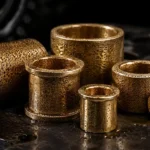
What Factors Are Considered When Designing Self-Lubricating Parts (Bushings)? The most significant feature of these parts is their microporous structure, which allows them to retain oil. During the design or finishing stages, heavy-cutting operations that could clog or crush these pores—or improper surface-sealing applications—must be strictly avoided.
Other Articles